

Understanding Return-to-Sport Rehabilitation
In sports, injuries are an inevitable challenge for athletes. Return-to-sport rehabilitation is a critical process designed to guide injured athletes back to their pre-injury performance levels, focusing not only on healing but also on rebuilding strength, confidence, and skill. Successful rehabilitation ensures athletes can safely resume their sport without fear of recurrent injury.
This process involves a multi-faceted strategy addressing both physical recovery and psychological readiness, supporting overall body transformation. Structured programs typically include physical therapy, strength training, and mental conditioning, all tailored to the athlete’s specific sport and needs. Following a personalized plan developed by experienced professionals is essential to prevent reinjury.
Physiotherapists play a key role in this process. They assess injuries accurately, create individualized rehabilitation plans, and monitor progress, ensuring athletes do not return to competition prematurely. By emphasizing both prevention and recovery, physiotherapists help athletes return stronger, more resilient, and better prepared for future challenges.
The Importance of Injury Prevention in Sports
Injury prevention is a crucial part of sports, as it is far more effective to prevent injuries than to treat them after they occur, and plays an important role in long-term body transformation. A proactive approach preserves an athlete’s health and extends career longevity. Prevention involves proper training, technique, and education to minimize the risk of harm.
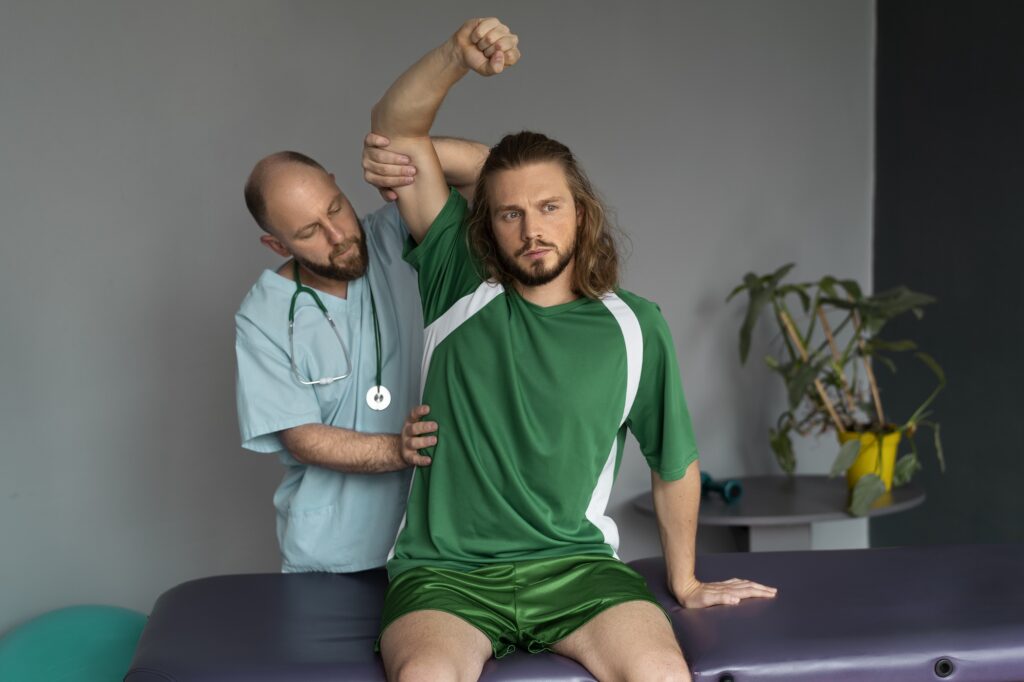
Athletes should understand the risks associated with their sport and maintain peak physical condition. Incorporating injury prevention strategies into daily routines—such as dynamic warm-ups, proper hydration, and adequate rest—can significantly reduce the likelihood of injury.
Physiotherapists play a key role by assessing movement biomechanics, identifying weaknesses, and providing corrective exercises, that support body transformation. By fostering a culture of injury prevention, they help athletes stay healthy, maintain their competitive edge, and perform at their best.
Key Strategies for Effective Rehabilitation
Effective rehabilitation relies on strategies that support an athlete’s recovery. Setting realistic, measurable goals—both short-term and long-term—provides direction and motivation, helping athletes track progress and stay focused.
Open communication between the athlete, physiotherapist, and other healthcare professionals ensures everyone is aligned, allowing for regular feedback and timely adjustments to the rehabilitation plan.
Adherence to a structured program is essential. Following a carefully designed sequence of exercises and treatments that gradually increase in intensity helps rebuild strength, improve flexibility, and restore functional movement. Consistency, guided by physiotherapists, is key to achieving successful recovery and a safe return to sport.
The Role of Physiotherapists in Re-Injury Prevention
Physiotherapists play a vital role in sports rehabilitation, particularly in preventing re-injury. They assess an athlete’s physical capabilities, identify residual weaknesses or imbalances, and design personalized rehabilitation programs to address them.
Education is a key part of their work. By teaching athletes injury prevention techniques and helping them recognize signs of overtraining or potential injury, physiotherapists empower athletes to take proactive steps in their care.
They also integrate evidence-based practices and modern technology, such as motion analysis and advanced therapeutic techniques, to optimize recovery. Through their expertise, physiotherapists help athletes stay healthy, reduce the risk of re-injury, and return to sport stronger and more resilient.

Assessing Athlete Readiness for Return to Sport
Determining an athlete’s readiness to return to sport requires careful evaluation of both physical and psychological factors. Physiotherapists play a critical role, using functional tests and subjective assessments to gauge preparedness.
Physical readiness is measured through sport-specific tests that evaluate strength, flexibility, and endurance, simulating the demands of actual competition. These results help determine if the athlete has regained the necessary physical attributes to perform safely at their pre-injury level.
Psychological readiness is equally important. Athletes must feel confident in their abilities and trust their bodies to handle competitive stress. Physiotherapists address fears or doubts, often collaborating with sports psychologists, to ensure a holistic assessment before clearance to return to sport.
Evidence-Based Techniques for Rehabilitation
Evidence-based techniques form the foundation of effective rehabilitation, combining scientific research and clinical expertise to ensure athletes receive the best care. Physiotherapists use a variety of methods to promote recovery and prevent re-injury.
Manual therapy, including massage, joint mobilization, and manipulation, helps improve range of motion, reduce pain, and support tissue healing. These techniques are often combined with therapeutic exercises to restore strength and flexibility.
Additional evidence-based approaches include modalities such as ultrasound, electrical stimulation, and cryotherapy, which aid in pain management, inflammation reduction, and tissue repair. Physiotherapists tailor these techniques to each athlete’s specific injury and needs, providing a personalized rehabilitation program.
Incorporating Strength and Conditioning in Rehab
Strength and conditioning are essential components of a successful rehabilitation program, helping rebuild muscle strength, improve endurance, and enhance overall athletic performance. Physiotherapists integrate these exercises to ensure a comprehensive recovery.
Strength training targets specific muscle groups weakened by injury, with exercises progressively increasing in intensity to allow safe adaptation and prevent re-injury.
Conditioning exercises focus on cardiovascular fitness and endurance, often including activities like cycling, swimming, or running, tailored to the athlete’s sport and injury. By combining strength and conditioning, physiotherapists prepare athletes for a safe and effective return to competition.
Conclusion
The future of sports rehabilitation is promising, with advancements in technology, research, and a deeper understanding of holistic therapy. Physiotherapists will continue to play a pivotal role, integrating innovative techniques to enhance recovery outcomes.
Emerging technologies such as virtual reality, wearable devices, and telehealth offer new ways to monitor progress, deliver personalized care, and engage athletes in their rehabilitation. By embracing these innovations, physiotherapists can provide more effective, efficient, and tailored support, helping athletes return safely and perform at their best.